

Yes, it snows in Morocco, often heavily, but only in the mountains. The High Atlas is usually white from December to March, and Mount Toubkal (4,167 m) can keep snow into May. Morocco even has a ski resort, Oukaimeden, about an hour and a half from Marrakech. The Middle Atlas town of Ifrane gets snow most winters, and it holds Africa’s lowest recorded temperature.
What it doesn’t do: snow in Marrakech, Fes, Casablanca, on the coast or in the Sahara dunes. There you get cold nights, not snow.
Where it snows in Morocco
Morocco is crossed by four mountain ranges, and altitude decides almost everything. As a rough rule, snow is common above 2,000 metres in winter, occasional between 1,500 and 2,000 metres, and very rare below that.
| Place | Altitude | Snow in winter |
|---|---|---|
| Mount Toubkal, High Atlas | 4,167 m | Every year November to May |
| Oukaimeden ski area | 2,600 to 3,250 m | Most years December to March |
| Tizi n’Tichka pass (Marrakech to Ouarzazate) | 2,260 m | Several times a winter |
| Michlifen, near Ifrane | around 2,000 m | Most winters |
| Ifrane, Middle Atlas | about 1,650 m | Most winters, a few times |
| Imlil village, base for Toubkal | about 1,740 m | Some winters |
| Chefchaouen, Rif | about 600 m | Rare (the peaks above get it) |
| Marrakech, Fes, Rabat, Casablanca | under 500 m | Practically never |
| Merzouga, Zagora (Sahara) | about 700 to 800 m | Practically never |
| Agadir, Essaouira, the Atlantic coast | sea level | Never |
The High Atlas runs diagonally across the country, from the Atlantic near Agadir towards the north-east, so the snow line is visible from a lot of places that never get snow themselves. On a clear January morning, the white wall of the Atlas behind the palm trees of Marrakech is one of the most surprising views in North Africa.
Snow checker: place and month
Pick where you are going and when. The answer is based on altitude and normal winter patterns. It cannot predict a particular year, so check a mountain forecast a few days before you go.
Will I see snow?
Skiing in Morocco: Oukaimeden and Ifrane
Oukaimeden
Oukaimeden is a high plateau in the High Atlas, about 75 km by road from Marrakech through the Ourika valley. The drive takes roughly an hour and a half. The base sits around 2,600 m, and a two-seat chairlift built in 2001 climbs to about 3,250 m. A few drag lifts serve gentler slopes nearer the village. The season officially runs from December to March, but the snow varies a lot from year to year. January and February are the safest bet.

Don’t expect an Alpine resort. Equipment rental is basic and quality varies. Local men with donkeys offer to carry you up the lower slopes, and a lot of visitors come just to sledge, build snowmen and eat grilled meat at the stalls along the road. On a good Sunday, families drive up from Marrakech by the thousand, so go on a weekday if you can.
Ifrane and Michlifen
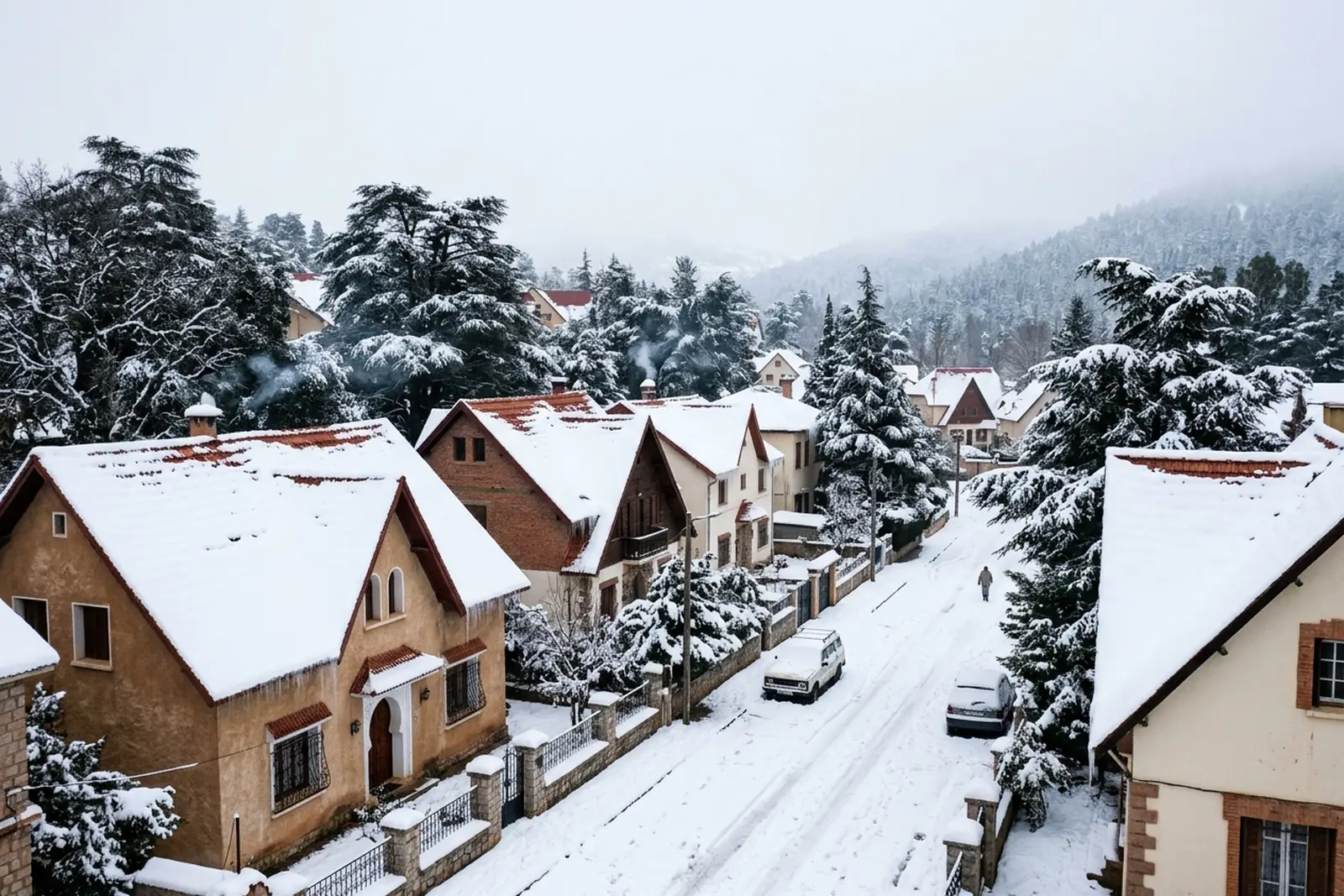
Ifrane, about an hour south of Fes, was founded in 1929 and built with sloping roofs and chalet-style houses. Moroccans call it “the Switzerland of Morocco”. After a snowfall the town, its cedar forest and the Michlifen slopes nearby draw day-trippers from Fes, Meknes and Rabat. The skiing is very limited. Most people come for the scenery, short walks among the cedars and a chance to see the Barbary macaques that live in the forest around Azrou.
Toubkal in winter
Climbing North Africa’s highest peak between December and March is a real winter ascent, not the long hike it is in summer. The upper slopes are covered in hard snow and ice, so crampons and an ice axe are needed, plus a licensed mountain guide who knows the conditions. Days are short, and nights at the refuge, at about 3,200 m, are well below freezing. Avalanches are not common, but they do happen after heavy snowfall.
If you want snow scenery without the technical climb, a day walk from Imlil to the villages around it gives you white peaks and quiet trails. It is also the most common way visitors see the snow.
Snow on the roads: what travellers should know
Snow matters most for people crossing the mountains by car or on a desert tour from Marrakech.
- Tizi n’Tichka (N9), the main road from Marrakech to Ouarzazate and the desert, crosses the High Atlas at 2,260 m. After heavy snow, the authorities can close it for a few hours, or sometimes a day or more, until snowploughs clear it.
- Tizi n’Test (R203), towards Taroudant, is narrower and closes more easily.
- The Middle Atlas roads around Ifrane, Azrou and Midelt, on the way between Fes and Merzouga, can be icy early in the morning.
If you are driving yourself, leave early, keep a full tank and warm clothes in the car, and ask at your hotel or the local Gendarmerie whether the pass is open before you set off. Our guide to driving in Morocco lists the emergency numbers and the rules on the road.
What winter feels like in the Sahara and the cities
The desert is a big surprise for many visitors in winter. Days in Merzouga or Zagora can be pleasantly warm, around 18 to 20 °C, but clear skies mean nights can drop close to freezing. Desert camps provide heavy blankets. A warm layer for the evening around the fire is not optional.
In Marrakech, Fes and Meknes, winter days are often sunny and mild, but riads are built to stay cool. Old houses with open courtyards and tiled floors feel colder indoors than outside after sunset. Ask whether rooms are heated before you book. A good packing list for winter in Morocco includes a fleece, a light down jacket and warm socks, even if you never go near the mountains. Our packing list can be adapted for a winter trip.
For a wider picture of the country’s landscapes, from the Rif to the Atlantic and the Sahara, see what Morocco is known for.
Frequently asked questions
Has it ever snowed in Marrakech?
Snow in the city itself is exceptionally rare and not something to expect. What you do see in winter is frost on some mornings and snow-covered Atlas peaks on the skyline, about 60 km away.
Does it snow in the Sahara desert in Morocco?
Practically never. The Moroccan Sahara is dry, and the dunes of Merzouga and Chegaga are not high enough. Winter nights there are cold, but they are not snowy.
Can you ski in Morocco?
Yes, at Oukaimeden in the High Atlas, roughly an hour and a half from Marrakech, and on a smaller scale at Michlifen near Ifrane. Snow is most reliable in January and February. Equipment can be rented on site.
What is the coldest month in Morocco?
January in most places. In the mountains, it is also the month with the most snow on the ground.
Is the road from Marrakech to the desert open in winter?
Yes, nearly all the time. The Tizi n’Tichka pass can close for a short time after heavy snow, so check conditions on the morning you travel and allow some extra time.
- World Meteorological Organization, Weather and Climate Extremes Archive: lowest temperature recorded in Africa, Ifrane, 11 February 1935.
- Skiresort.info, Oukaimeden chairlift data (Doppelmayr, 2001, base 2,648 m, top 3,255 m).
- Badri and Gauquelin (1994), meteorological data for the Oukaimeden massif, Haut Atlas de Marrakech.
Snow varies from year to year. This page is an independent travel guide. Check a mountain forecast and road conditions before you travel.