
The best things to buy in Morocco are the ones each region has made for generations. That means argan oil and amlou from the Souss, saffron from Taliouine, rugs from the Middle and High Atlas, leather from Fes, pottery from Safi, Fes and Tamegroute, thuya wood from Essaouira and Amazigh silver from Tiznit. Tea glasses, beldi soap, spices and lanterns make easy, cheap gifts.
Two things to avoid: anything sold as a genuine antique, meteorite or rare fossil without official paperwork, and oils or spreads over 100 ml in your cabin bag.
What to buy in Morocco: 14 souvenirs worth carrying home
1. Argan oil
The argan tree grows wild almost only in south-western Morocco. UNESCO added the practices and know-how around it to its list of intangible cultural heritage in 2014, and “Argane” became Morocco’s first protected geographical indication in 2009. There are two kinds. Cosmetic oil is pressed from raw kernels, is pale and has almost no smell. Culinary oil is pressed from toasted kernels, is golden and smells nutty. It is delicious on bread with honey.
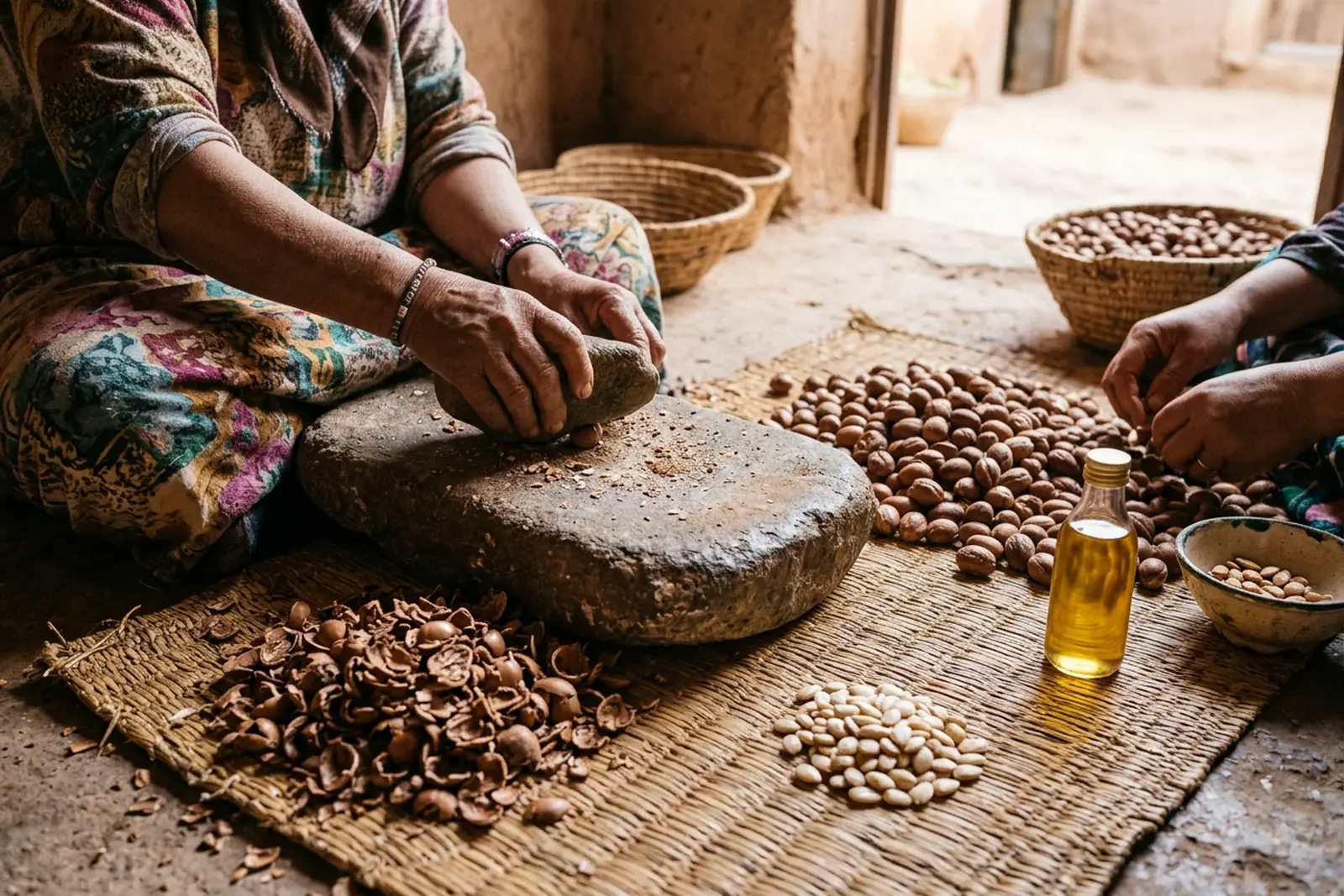
How to spot a good one: a dark glass bottle, a label with the producer or cooperative, and a price that makes sense. Real argan oil is never cheap, because it takes many hours of work to crack enough nuts for one litre. Women’s cooperatives along the Essaouira and Agadir roads let you watch the process.
2. Amlou
A spread of roasted almonds, argan oil and honey. It’s the breakfast treat of the Souss, and it’s hard to find abroad. Buy it in a sealed jar and pack it in your checked bag.
3. Saffron
Morocco’s saffron comes mostly from the area around Taliouine, between the High Atlas and the Anti-Atlas, and has a protected designation of origin. Real threads are deep red, slightly lighter at the tip, and turn water yellow slowly over several minutes. If threads bleed red at once, or the price is suspiciously low, walk away.
4. Spices and ras el hanout
Ras el hanout means “head of the shop”, the spice dealer’s best mix. Every shop has its own blend of cumin, ginger, cinnamon, turmeric, pepper and many others. Buy from a busy stall, ask for it to be vacuum-sealed, and add cumin, paprika and a cone of dried mint for tea.
5. Dates
The oases of the Drâa and Tafilalet valleys, around Zagora and Erfoud, grow some of the best dates in the world, including the large Mejhoul. October and November, just after the harvest, is the best time to buy.
6. A tea set
A silver-coloured teapot (berrad), a tray and a set of decorated glasses are the most Moroccan gift there is, and they cost little. Wrap the glasses in clothes and carry them in your cabin bag.
7. Pottery and tagines
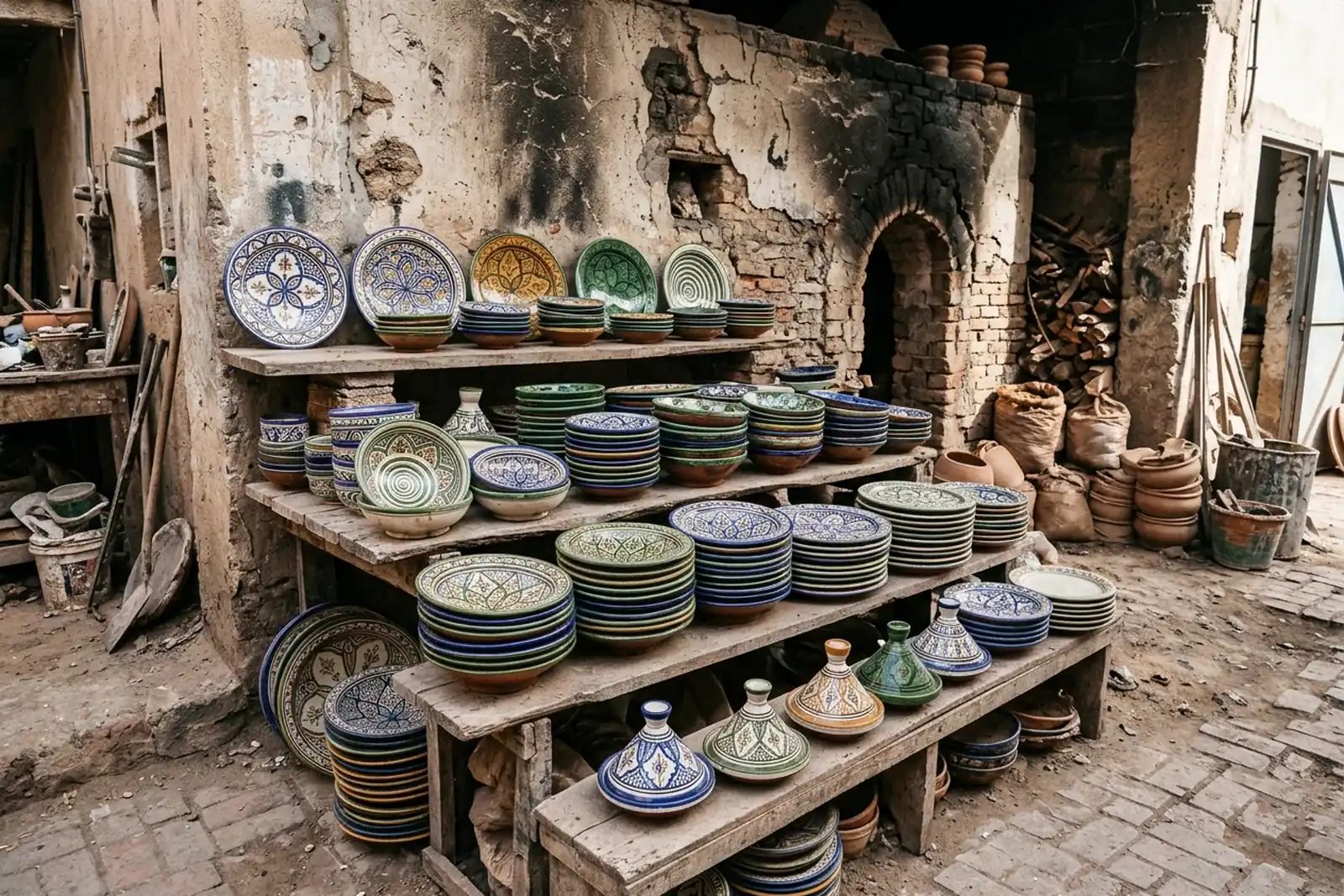
Each pottery town has its own style. Safi has bright glazed ceramics, Fes is famous for its cobalt blue and white, and Tamegroute, in the Zagora region, makes a rough green glaze found nowhere else. A decorative painted tagine is not always safe for cooking. If you want to cook with it, buy a plain unglazed or food-safe cooking tagine.
8. A rug
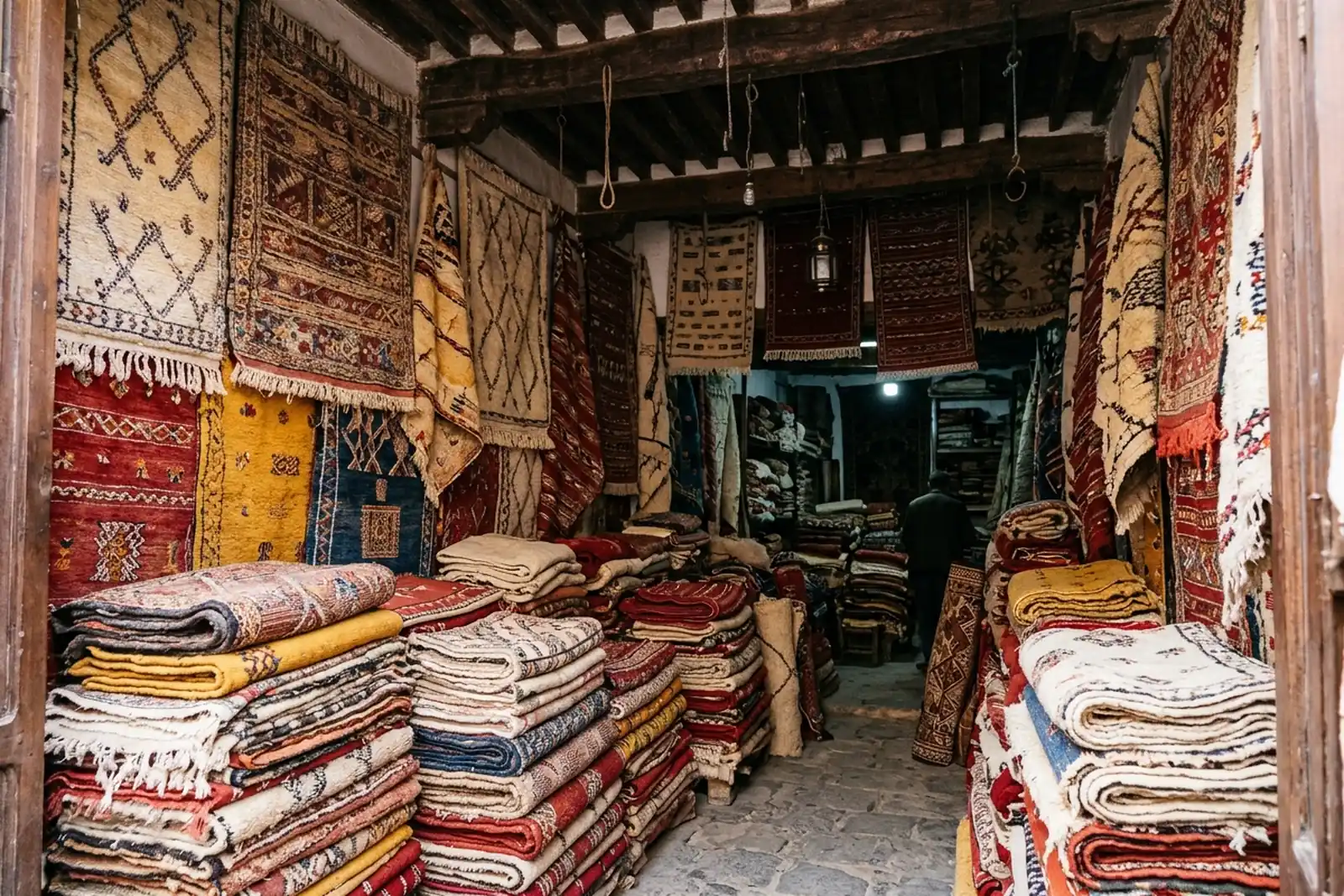
The big purchase of many trips. Beni Ourain rugs from the Middle Atlas are thick and cream-coloured with dark lines. Azilal rugs are colourful and playful. Taznakht, south of Ouarzazate, is the market town of the Ouzguita weavers and their deep red and orange rugs. Boucherouite rugs are made from recycled textile strips. Take your time, compare several shops, and never let anyone hurry you because “the cooperative closes today”.
9. Leather: bags, poufs and babouches
Fes has the most famous tanneries, but leather is sold in every medina. Check the stitching, the inside lining and the smell. Real leather has a warm smell. Synthetic leather smells of plastic and feels the same everywhere, with no natural grain. Poufs are often sold empty to save weight, so you fill them at home.
10. Lanterns and metalwork
Hand-pierced brass, copper and iron lanterns cast patterns of light across the room. Flat-packed models and small sizes travel best.
11. Thuya wood
Essaouira’s craftsmen make boxes, chess sets and bowls from the roots of the thuya tree, a sweet-smelling wood with dark knots. Ask for a piece that is varnished on the inside, because unvarnished wood keeps a strong scent.
12. Beldi soap and ghassoul
The black olive soap and mineral clay used in the hammam are light, cheap and useful. They are one of the best gifts for the price. Our guide to the Moroccan hammam explains how they are used.
13. Amazigh silver jewellery
Tiznit, south of Agadir, is the historic centre of Amazigh silversmithing, with fibulas, bracelets and heavy necklaces. Ask whether a piece is solid silver or plated, and get it written on the receipt.
14. A caftan or djellaba
UNESCO added the Moroccan caftan to its list of intangible cultural heritage in December 2025. A tailor-made caftan takes days or weeks. A ready-made djellaba or a pair of embroidered babouches is a simpler choice.
Can I take it home? Souvenir checker
Choose an item to see whether it can leave Morocco, how to pack it, and what to watch out for at customs back home.
Souvenir checker
General guidance for personal quantities. Rules in your own country may be stricter. Check with its customs service.
What not to buy
- Antiques and old manuscripts. Taking works of art, collection items or antiques out of Morocco requires an authorisation from the Ministry of Culture. A trader saying “the papers will follow” is not enough.
- Meteorites and rare fossils. Southern Morocco, around Erfoud and Rissani, is famous for fossils. Since the 2015 mining law, collecting and exporting geological heritage has been regulated. Small, common, polished pieces sold in shops are usually fine, and IATA’s Timatic database lists up to ten ornamental stones, fossils or semi-precious stones as allowed for travellers. Large specimens, rare species and meteorites need documents. If in doubt, don’t buy.
- Animal products. Tortoise shell, ivory, coral and anything made from protected species is illegal under the CITES convention, both leaving Morocco and arriving home.
- Fake argan and fake saffron. Cheap argan oil is often mixed with other oils, and cheap saffron is often safflower or dyed fibres.
Paying, bargaining and the tax refund
In the souks, prices are agreed, not printed. Start by asking the price, offer what you think it is worth to you, and settle somewhere in the middle with a smile. Walking away politely is part of the game. Larger shops and cooperatives have fixed prices and usually accept cards. Card fees and the “pay in your currency” trap are explained in our guide to using a card abroad.
Non-residents can claim back VAT on purchases of 2,000 dirhams or more, tax included, per invoice at shops that are part of the refund scheme. Ask for the refund form at the till, keep the goods unused, and present the form with the items to customs at the airport before check-in. If you are carrying cash home, remember that you can’t take more than 2,000 dirhams in banknotes out of Morocco. Spend or exchange the rest before you leave.
Packing your souvenirs
- Liquids and spreads (argan oil, olive oil, amlou, rose water) count as liquids. Over 100 ml, they must go in your checked bag. Our guide to liquid rules for flights explains the limits.
- Glass and ceramics: wrap them in clothes and carry them in your cabin bag if they fit. Many shops will bubble-wrap for free if you ask.
- Rugs: most dealers fold or roll a rug into a tight parcel you can check in. If you ship it, get the dimensions, the shipping cost, the carrier and the delivery time written on the receipt.
- Spices travel best vacuum-sealed. Otherwise the smell takes over your whole suitcase.
- Weight: tagines, lanterns and tea trays add up quickly. Check your allowance before the last day of shopping.
Customs when you get home
Most souvenirs are fine, but every country has a duty-free limit and food rules. The EU and the UK ban meat and dairy products in luggage coming from outside Europe, and the United States restricts most meat products. The value limits for gifts and purchases are in our Morocco customs allowance guide, along with what you can bring into Morocco.
Frequently asked questions
What is Morocco famous for buying?
Argan oil, rugs, leather goods, ceramics, lanterns, spices and tea sets. Most of these are made by hand, and each region has its own specialities.
Is it cheaper to buy argan oil in Morocco?
Usually yes, especially from a cooperative in the Souss region. But very cheap oil in tourist shops is often diluted. Pay for a labelled bottle from a known producer.
Can I take a tagine on the plane?
Yes. A clay tagine can go in your cabin or checked bag. Wrap it well, because the lid breaks easily. There are no customs restrictions on new pottery.
Can I bring fossils back from Morocco?
Small, common polished fossils sold as souvenirs are generally accepted, and you should keep the receipt. Large or rare specimens and meteorites need official export documents, so avoid them unless the seller can supply the paperwork.
Do I have to bargain everywhere?
No. Supermarkets, malls, fixed-price shops and cooperatives with price tags don’t bargain. In the medina souks it is expected and part of the experience.
- UNESCO, Argan, practices and know-how concerning the argan tree (2014).
- Administration des Douanes et Impôts Indirects, douane.gov.ma: VAT refund for non-residents and export of currency.
- Law 33-13 on mines (2015) and its 2019 implementing decree on geological heritage; IATA Timatic, customs information for Morocco.
- CITES, cites.org.
This page is an independent travel guide and is not legal advice. For anything valuable or unusual, ask the seller for an invoice and check with customs before you buy.