
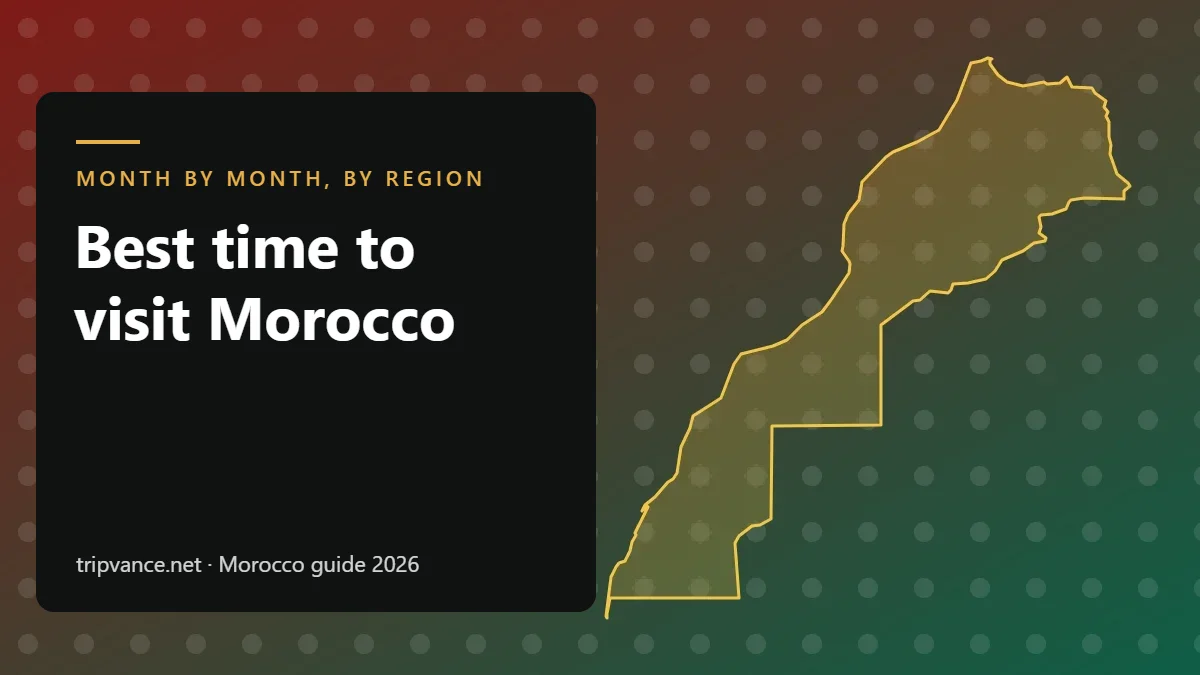
The best time to visit Morocco is spring, from March to May, and autumn, from late September to November. Those months give you warm, dry days in Marrakech and Fes, comfortable nights in the Sahara and clear trails in the Atlas. But Morocco is big and its climates are very different, so the right month really depends on where you are going and what you want to do.
- Cities and a mix of everything: March to May, or October and November.
- Sahara desert trip: October to April. Avoid June to August, when afternoons pass 40 °C.
- Beach and surf: June to September on the Atlantic coast, where a sea breeze keeps it cooler than inland.
- Trekking in the High Atlas: May to October. In winter, Toubkal is a snow climb.
- Cheapest: January, early February and the second half of November, outside school holidays.
Why the answer depends on the region
A lot of travel advice treats Morocco as one climate. It isn’t. In a single day you can drive from snow at the Tizi n’Tichka pass to the palm groves of Ouarzazate, and from the windy beaches of Essaouira to the hot plain around Marrakech. Four zones matter for planning:
- The imperial cities (Marrakech, Fes, Meknes, Rabat inland areas): hot, dry summers and mild, sunny winters with cold nights.
- The Atlantic coast (Tangier down to Dakhla): the ocean keeps temperatures moderate all year. Summer rarely feels brutal here.
- The Sahara (Merzouga, Zagora, M’hamid): extreme heat in summer, very pleasant days and near-freezing nights in winter.
- The mountains (High, Middle and Anti-Atlas, plus the Rif): proper winters with snow, and the best walking weather in summer.
So “Is July a good time?” has two honest answers. It is a poor month for Marrakech and the desert, and a great one for Essaouira, Agadir and the trails around Imlil.
Morocco month by month
The table uses average daytime highs measured in Marrakech, which is a good reference for the inland cities. Expect the coast to be cooler in summer and the desert to be hotter.
| Month | Marrakech high | What it’s like |
|---|---|---|
| January | about 19 °C | Sunny days, cold nights (riads can be chilly). Quiet and cheap. |
| February | about 21 °C | Almond blossom in the Anti-Atlas. Ramadan starts around 8 February in 2027. |
| March | about 24 °C | The wettest month in Marrakech, though rain usually comes in short spells. |
| April | about 25 °C | Close to perfect almost everywhere. Busy around Easter. |
| May | about 29 °C | Long warm days, rose harvest in the Dades valley, good trekking. |
| June | about 34 °C | Inland heat starts. Coast and mountains are lovely. |
| July | about 38 °C | Hottest month inland. Moroccan summer holidays begin. |
| August | about 37 °C | Peak domestic travel, full coast hotels, very hot desert. |
| September | about 32 °C | Heat eases after the first two weeks. The sea is warm. |
| October | about 28 °C | Excellent for cities, desert and walking. |
| November | about 23 °C | Mild, golden light, fewer visitors after the autumn school break. |
| December | about 20 °C | Sunny but cold at night. Busy and pricey over New Year. |
Check a month, region by region
Based on long-term averages. A cold snap or a heatwave can shift things by several degrees, so check the forecast a week before you leave.
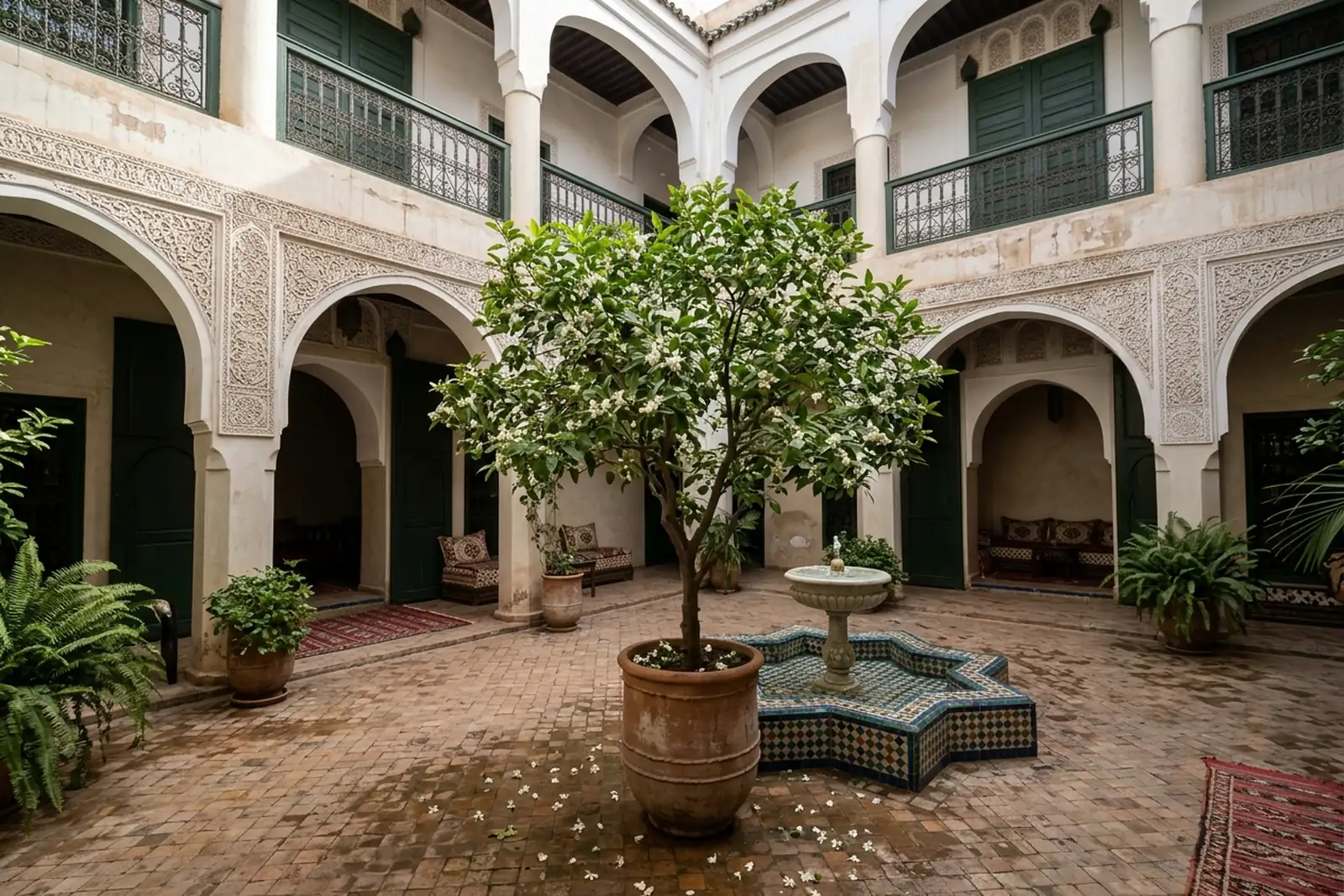
Spring (March to May): the safest choice
If you only get one trip and want to see a bit of everything, go in spring. Days in Marrakech sit between the mid-20s and the high 20s, which is warm enough to eat on a terrace at night without being tiring in the medina at noon. The countryside is green after the winter rain, poppies line the roads in the Middle Atlas and the snow on the High Atlas peaks makes a fine backdrop.
The catch is popularity. European Easter holidays fill riads in Marrakech and Fes, and prices go up for two weeks or so. Booking a month or two ahead is usually enough. March can also bring a few grey, rainy days in the north, so keep a flexible day in your plan.
Summer (June to August): coast and mountains only
Summer gets a bad name because of the inland heat, and it is deserved. Marrakech averages highs around 37 to 38 °C in July and August, and the Sahara near Merzouga regularly climbs past 43 °C by day with nights that stay close to 30 °C. A desert camp at that time is more endurance test than holiday.
The coast tells a different story. Essaouira is famous for its cool wind, and Agadir, Taghazout and the beaches near Tangier and Asilah are at their best. This is also prime trekking season in the High Atlas: villages like Imlil are cool at night and the route to Toubkal is free of snow.
Two practical points. July and August are the Moroccan school holidays and the months when many Moroccans living in Europe come home, so ferries, trains and beach hotels fill fast. And in the cities, plan your sightseeing for early morning and late afternoon, with a long lunch and a rest in between, which is what locals do anyway.
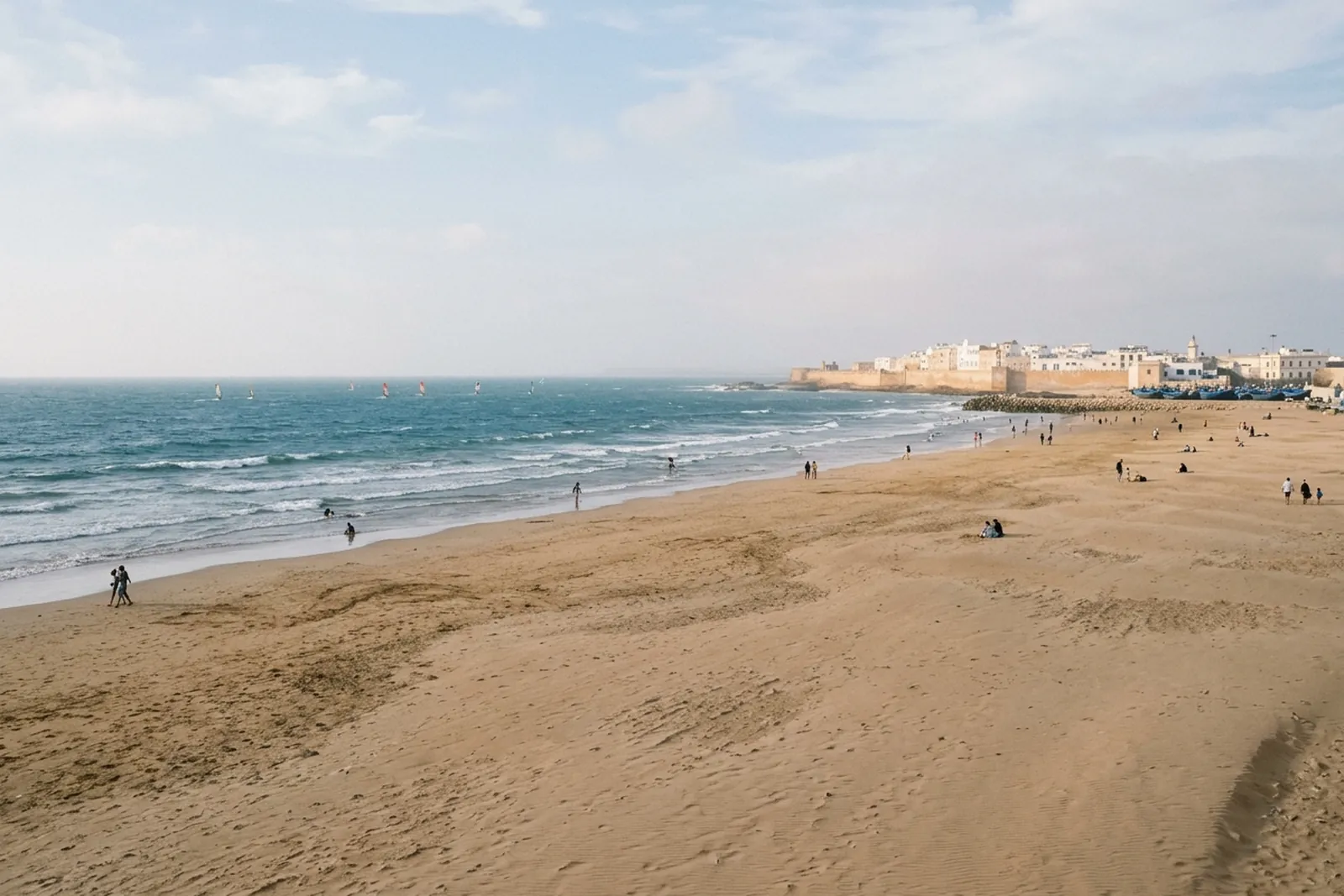
Autumn (September to November): the insider’s pick
Ask people who live in Morocco and many will say October is the best month of the year. The summer heat breaks in the second half of September, the sea is still warm, the desert becomes pleasant again and the light turns soft and golden. Dates are harvested in the oases of the Draa and Tafilalet around this time.
November is quieter still. Daytime temperatures in Marrakech are in the low 20s, hotels drop their rates outside the autumn school break, and you can walk the medinas without summer crowds. Nights start to get cold, so bring a warm layer.
Winter (December to February): sunny, cheap and chilly
Winter in Morocco is not grey. Most days are bright and dry, and Marrakech reaches about 19 °C in the afternoon. The problem is the evening: temperatures can fall to 5 °C or lower, and many traditional houses have tiled floors and little heating. Choose a riad that mentions heating or a fireplace and you will be fine.
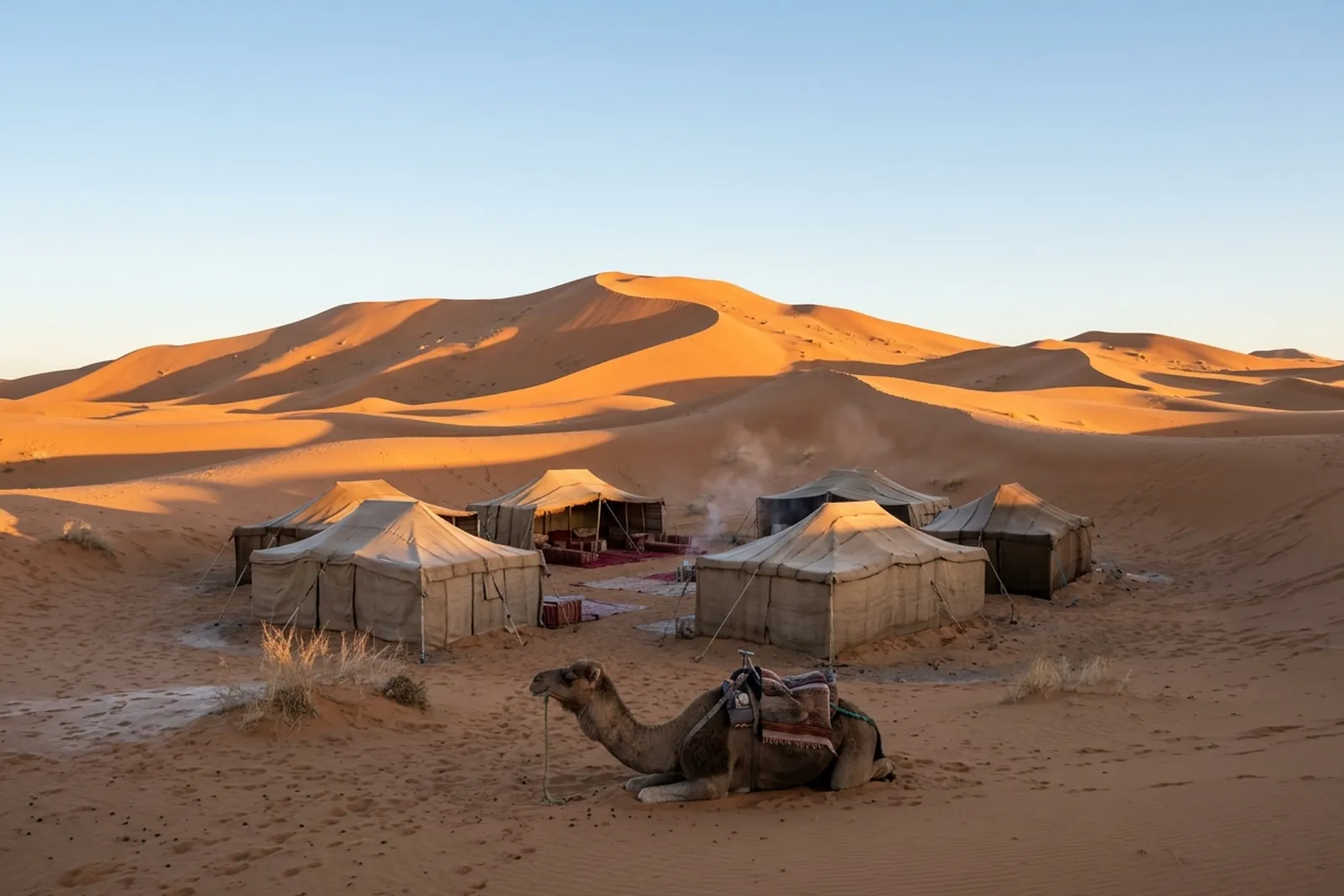
It is a great season for the desert. Days on the dunes are mild and the starry nights are spectacular, but you need a proper sleeping bag or a camp with good blankets, because it can drop to around freezing. In the mountains, snow closes some high passes for a few hours or days at a time, and Oukaimeden opens for skiing when there is enough cover. Our guide on snow in Morocco explains where and when.
The exception is the week between Christmas and New Year, when Marrakech and the desert camps are fully booked and prices peak.
Ramadan, holidays and events to plan around
Islamic holidays follow the lunar calendar and move about 11 days earlier each year. In 2027, Ramadan in Morocco is expected to begin around 8 or 9 February, with Eid al-Fitr around 9 to 11 March. Travelling during Ramadan is easy: tourist restaurants stay open, and evenings after the fast are some of the liveliest of the year. Just expect some cafés and shops to close by day and opening hours to shift.
Eid al-Adha is the big family holiday. Transport is packed in the days before it and many businesses close for two or three days. Check the full list in our page on Morocco public holidays in 2027 before you book.
A few events worth timing a trip around: the Rose Festival in Kelaat M’Gouna in May, the Gnaoua World Music Festival in Essaouira in June, and the date harvest celebrations in Erfoud in autumn. Dates change every year, so confirm them with the organisers.
When is Morocco cheapest?
Prices follow European holidays more than the weather. The cheapest windows are usually:
- the first three weeks of January, after New Year;
- early February, before the European winter breaks;
- the second half of November;
- June, before the Moroccan summer holidays, if you stay on the coast or in the mountains.
The most expensive periods are Christmas to New Year, Easter, and July and August on the coast. If you are working out a full budget, our cost of living in Morocco guide gives current prices for food, transport and rooms.
Frequently asked questions
What is the worst month to visit Morocco?
For a classic trip with Marrakech and the desert, July and August are the hardest because of the heat. If you only want the coast or the mountains, those same months are excellent.
Is it cold in Morocco in winter?
Days are usually sunny and mild in the cities, around 18 to 20 °C, but nights are cold, often below 7 °C. The mountains get snow and the desert can approach freezing at night.
When can I see snow in Morocco?
Mostly from December to March in the High and Middle Atlas, at places like Oukaimeden, Ifrane and Michlifen. Toubkal keeps snow on its upper slopes into April in many years.
Is it a good idea to visit Morocco during Ramadan?
Yes, for most travellers. Hotels and tourist restaurants serve food as usual. Be discreet about eating, drinking and smoking in public during daylight, and enjoy the evenings, which are festive.
What should I pack?
Layers in every season, a warm jacket from November to March, sun protection all year, and covered shoulders and knees for the medinas. See our packing list for the full checklist.
- UK Met Office, Marrakech climate averages (average daily maximum by month).
- Weather and Climate, Merzouga July averages.
- Tripvance, Ramadan 2027 and public holidays 2027 guides (dates estimated from the lunar calendar, confirmed each month by the Ministry of Habous and Islamic Affairs).
This page is an independent travel guide. Weather varies from year to year; check a forecast before you travel.